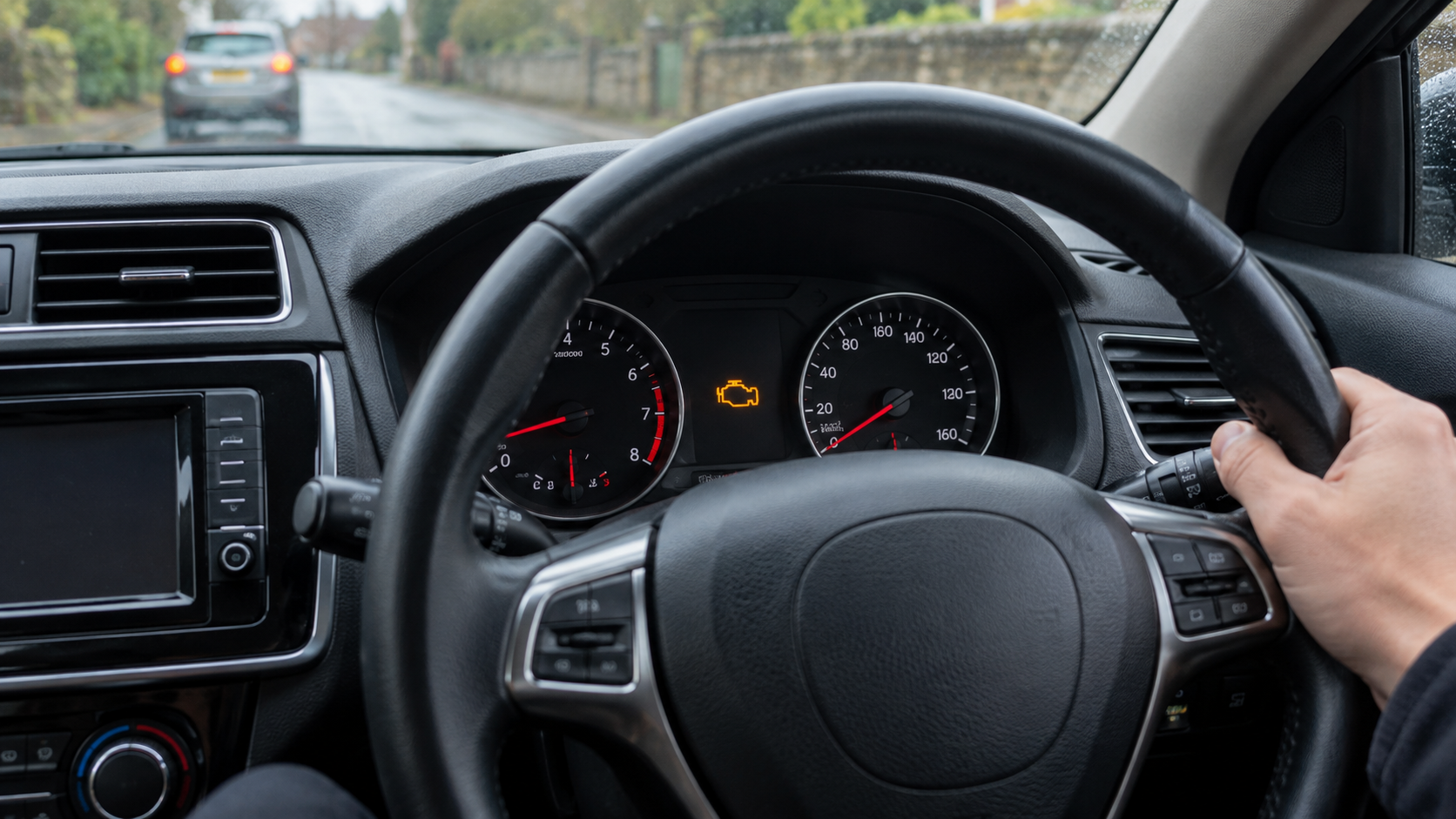
If the temperature keeps climbing or a red warning appears, find a safe place to stop and switch off. Continuing to drive an overheating engine can damage the cylinder head, gasket and other components.
Do not open a hot cooling system
A pressurised expansion tank or radiator can release scalding coolant. Let the engine cool and follow the handbook.
Look for clues, not heroics. A puddle, split hose, steam or a cooling fan that is not running can help explain the fault, but roadside diagnosis around hot moving parts is risky.
Topping up may not solve the cause
Low coolant means the coolant has gone somewhere. Even if adding the correct fluid gets you moving, the leak or other fault still needs investigating.
Repeated overheating needs proper diagnosis
Thermostats, water pumps, fans, leaks and head-gasket problems can produce overlapping symptoms. Guessing can become more expensive than testing the system properly.
Powered by Quotezone ⓘWe are an introducer appointed representative of Seopa Ltd (FCA FRN: 313860). Seopa Ltd, trading as Quotezone, provides the insurance comparison service and we receive a commission for any policies purchased, at no cost to you. We do not offer financial information.